

Introduction
A few years ago, showing up on page one of Google was the finish line. Today, that finish line has moved. Your customers in Austin, Dallas, San Antonio, and Houston aren’t just typing questions into a search bar anymore. They’re asking ChatGPT where to find a reliable plumber near them, asking Gemini to compare local HVAC companies, or asking Perplexity for the best-reviewed bakery in their zip code. If your business isn’t showing up in those answers, you’re losing customers before they ever visit your website.
This is where AI search optimization comes in, and it’s quickly becoming just as important as traditional SEO for small businesses across Texas. AI search optimization means structuring your website and content so that AI-powered search tools can understand, trust, and recommend your business. It’s sometimes called Generative Engine Optimization (GEO), and it works alongside your existing SEO strategy rather than replacing it.
At Web Designer Factory, we’ve spent years building websites for Texas small businesses, and we’ve watched this shift happen firsthand. In this guide, we’ll break down exactly what AI search optimization means, why it matters for your business, and practical steps you can take right now to improve your AI visibility.
Key Takeaways
- AI search tools like ChatGPT, Gemini, Claude, and Perplexity now influence how customers discover local businesses, not just Google.
- AI search optimization (also called GEO) focuses on making your content easy for AI models to read, understand, and trust.
- Structured data and schema markup help AI tools accurately pull information about your business.
- Clear, well-organized content with real answers to real customer questions performs best in both Google and AI search.
- Texas small businesses that adapt early will have a real competitive advantage over those who wait.
Why AI Search Matters for Texas Small Businesses Right Now
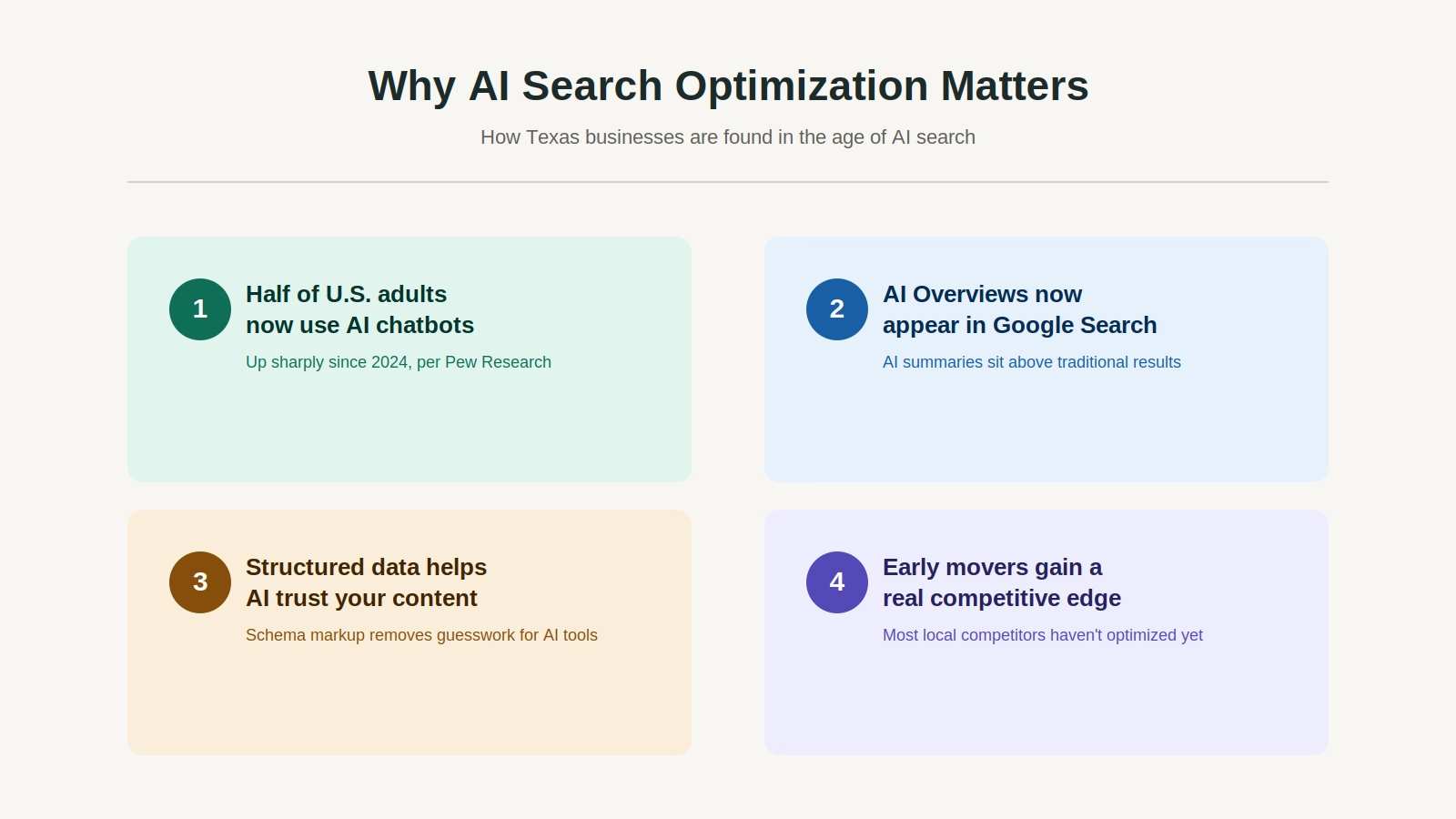
Search behavior has changed faster than most business owners realize. About half of U.S. adults now use AI chatbots, a share that has grown substantially since 2024, according to Pew Research Center’s 2026 survey on Americans and AI. A large portion of those users turn to chatbots specifically for information searching, which increasingly includes finding local businesses and services. Meanwhile, Google itself has rolled out AI Overviews directly in search results, which means even traditional Google searches now include AI-generated summaries that pull from trusted, well-structured websites.
For a small business in Texas, this creates both a risk and an opportunity. The risk is that if your website content is thin, outdated, or hard for AI tools to interpret, you simply won’t get mentioned. The opportunity is that most of your local competitors haven’t optimized for this yet, which means there’s still time to get ahead.
Think about a real example. A family-owned roofing company in Fort Worth has a website with a homepage, a contact page, and a short “About Us” blurb. Compare that to a competitor who has detailed service pages explaining exactly what storm damage roof repair involves, clear pricing guidance, FAQs about insurance claims, and customer reviews embedded throughout the site. When someone asks an AI assistant “who does storm damage roof repair near Fort Worth,” the business with clear, detailed, well-structured content is far more likely to be the one recommended.
What Is Generative Engine Optimization (GEO)?
Generative Engine Optimization is the practice of optimizing your website content specifically so that AI language models can accurately read, summarize, and recommend it. While traditional SEO focuses heavily on keywords and backlinks, GEO focuses on clarity, structure, and trustworthiness.
AI models like the ones powering ChatGPT and Claude don’t just scan for keywords. They try to understand context, extract facts, and determine whether a source is credible enough to reference in an answer. That means your website needs to do a few things well:
- Answer real questions clearly and directly, rather than burying information in vague marketing language.
- Use proper headings and structure so content is easy to parse.
- Include accurate, specific details like service areas, hours, pricing ranges, and credentials.
- Build genuine trust signals such as reviews, certifications, and case studies.
This is closely related to what’s often called LLM SEO, since large language models are essentially reading your site the way a very literal, very thorough researcher would. If your content is vague, an AI tool has nothing solid to work with.
The Role of Structured Data and Schema Markup
One of the most practical, technical steps a Texas small business can take is implementing structured data, also known as schema markup. This is a type of code added to your website that explicitly tells search engines and AI tools what different pieces of content mean. Google’s own Search Central documentation on structured data explains that this markup helps search engines classify page content and understand context more accurately.
For example, schema markup can clearly label your business name, address, phone number, hours of operation, services offered, and customer reviews in a format that machines can read instantly. Google has long used this data to power rich results in search, and AI search tools rely on similar structured signals to pull accurate information about local businesses.
Without schema markup, an AI tool has to guess at what your content means. With it, there’s no ambiguity. This is one of the simpler technical upgrades a web design partner can implement, and it often makes a noticeable difference in how accurately your business is represented in AI-generated answers. If you’d like a deeper walkthrough, our guide to 5 reasons ChatGPT may be overlooking your business breaks down each mistake to help you show up in AI search.
Common Types of Schema Worth Adding
- LocalBusiness schema to confirm your name, address, phone number, and service area.
- FAQ schema to help AI tools pull direct answers from your FAQ section.
- Review schema to surface star ratings and testimonials.
- Service schema to clearly define what you offer.
How to Write Content That AI Search Tools Actually Trust
Good AI search optimization isn’t about tricking algorithms. It’s about writing genuinely useful, specific content that answers the questions your customers are already asking. Here are a few practical habits worth adopting.
Answer the Question in the First Sentence
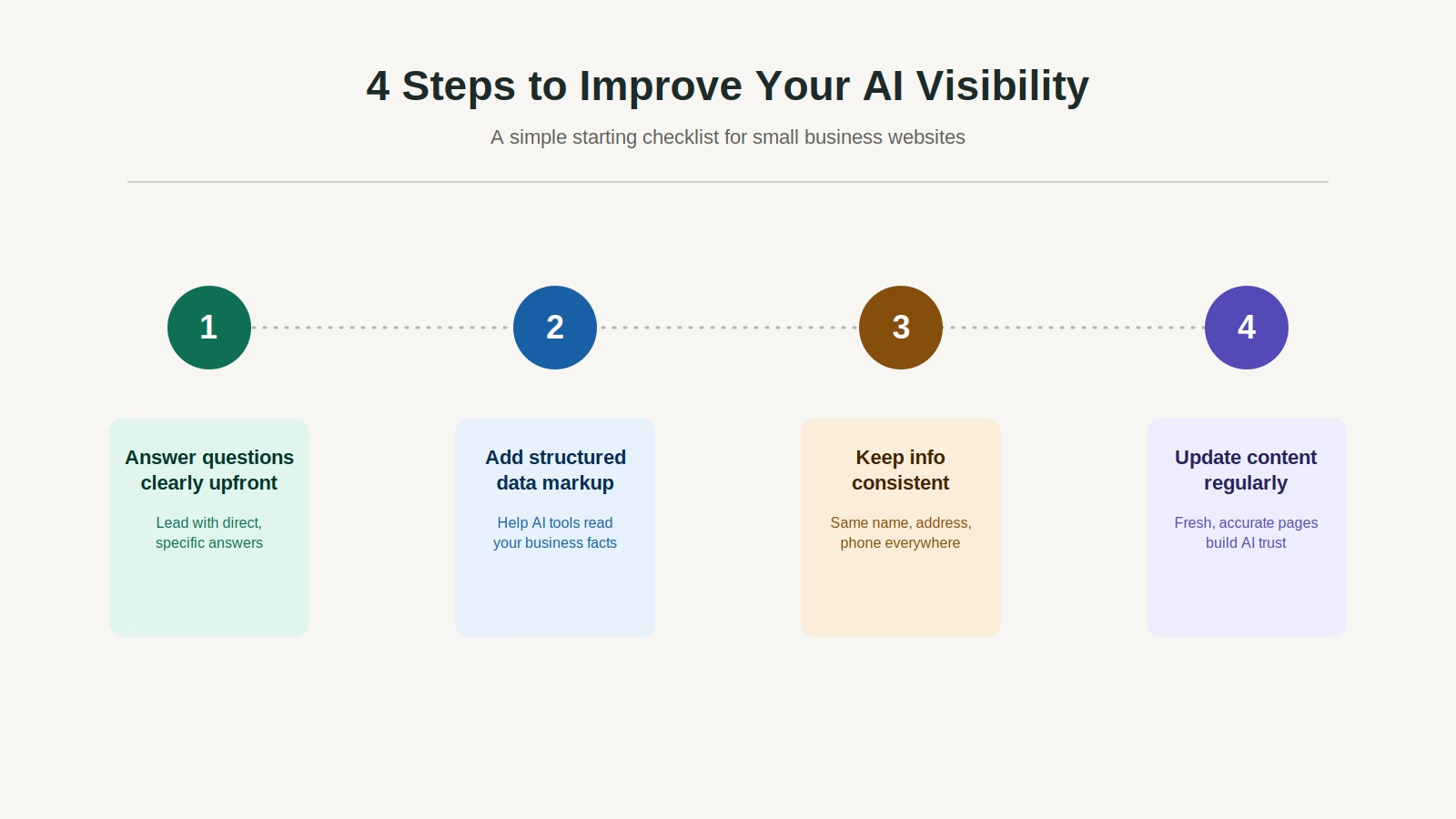
If you have a page or blog post targeting a specific question, like “how much does a kitchen remodel cost in Texas,” answer it clearly in the opening sentence or two before going into detail. AI tools tend to pull from content that gets to the point quickly, and so do busy readers.
Be Specific, Not Vague
Instead of writing “we offer competitive pricing,” explain what that actually means. Give a realistic price range, explain what affects cost, or describe your process. Specificity builds trust with both readers and AI models, which are trained to favor concrete, verifiable information over generic claims.
Keep Your Business Information Consistent Everywhere
Your business name, address, and phone number should match exactly across your website, Google Business Profile, and any directory listings. Inconsistencies confuse both traditional search engines and AI tools trying to verify who you are and where you operate. Our local SEO services page walks through how we help Texas businesses keep this information consistent across every platform.
Update Content Regularly
Outdated information is one of the fastest ways to lose trust with AI search tools. If your service pages, pricing, or team information haven’t been updated in a couple of years, it’s worth a refresh. Fresh, accurate content signals that your business is active and reliable.
AI Search Optimization Still Works Alongside Traditional SEO
It’s worth being clear that AI search optimization doesn’t replace traditional SEO. You still need solid technical fundamentals: fast page load times, mobile-friendly design, secure hosting, quality backlinks, and well-researched keywords. Our website design services are built around these fundamentals from the ground up. AI search optimization builds on top of that foundation.
Think of it this way. Traditional SEO gets you found. AI search optimization gets you recommended. Both matter, and the businesses that invest in both will have the strongest overall online presence heading into the next few years.
Practical Next Steps for Texas Business Owners
If you’re not sure where your website currently stands, here’s a simple starting checklist:
- Review your service pages and ask whether they clearly answer the questions a real customer would ask.
- Check whether your site has schema markup implemented, or whether this is something your web designer can add.
- Make sure your business information is consistent across your website and all major listings.
- Add or update an FAQ section using real questions your customers ask over the phone or in person.
- Audit your site’s overall structure to confirm it uses clear, logical headings.
None of these steps require reinventing your business. They require presenting the expertise you already have in a way that’s clear, structured, and easy for both people and AI tools to understand.
Conclusion
AI search is no longer a future trend. It’s already shaping how Texas customers find and choose local businesses. The good news is that the fundamentals of good AI search optimization, clear content, honest specifics, and solid technical structure, are things every small business can realistically achieve with the right guidance.
If you’re not sure whether your website is ready for how people search today, the team at Web Designer Factory is happy to take a look and walk you through what improvements would make the biggest difference for your business. Feel free to contact us or explore our website design services to see how we can help.
FAQs
What is AI search optimization?
AI search optimization is the process of structuring your website content so that AI tools like ChatGPT, Gemini, Claude, and Perplexity can accurately read, understand, and recommend your business in response to user questions.
Is AI search optimization the same as SEO?
Not exactly. Traditional SEO focuses on ranking in search engines like Google, while AI search optimization, or GEO, focuses on being accurately understood and referenced by AI language models. The two work together and share many of the same foundations, like clear content and structured data.
Do small businesses in Texas really need to worry about AI search yet?
Yes. AI-powered search tools are already influencing how people find local services, and adoption is growing quickly. Businesses that optimize now will have a head start over competitors who wait.
What is schema markup and do I need it?
Schema markup is code added to your website that clearly labels information like your business hours, services, and reviews for search engines and AI tools. It’s not required, but it significantly improves how accurately your business information is represented.
How long does it take to see results from AI search optimization?
Timelines vary depending on your starting point, but many businesses begin seeing improved visibility within a few months of implementing clearer content, structured data, and consistent business information.