Cross-Platform App Development Services
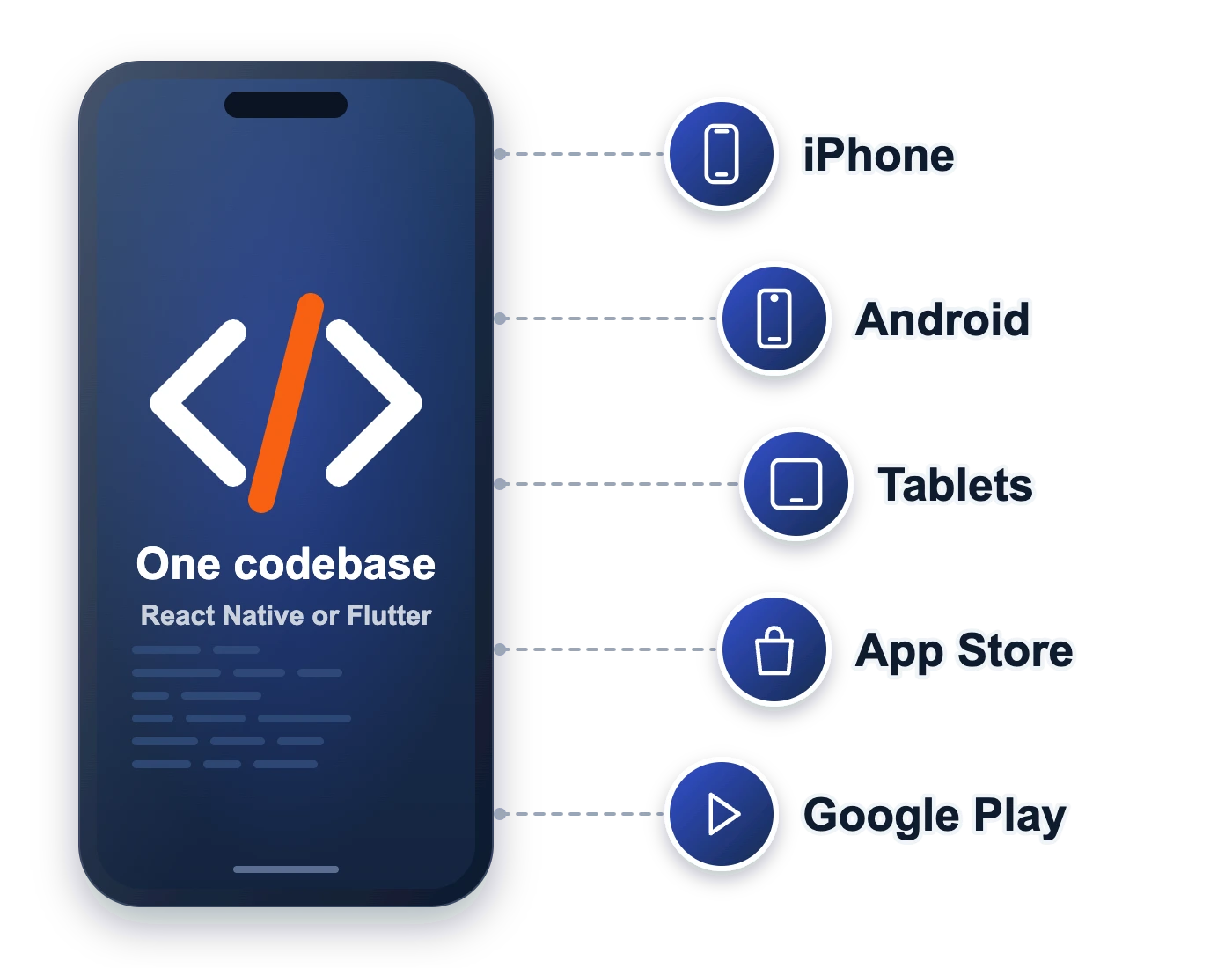
Web Designer Factory’s cross-platform app development services give you one app for iPhone and Android, built from a single React Native or Flutter codebase. You pay for one build instead of two, every update reaches both phones at once, and you see a fixed price before any work starts.

Businesses we’ve designed and built for











What is cross-platform app development?
Cross-platform app development means writing one app that runs on both iPhone and Android, instead of building and paying for two separate apps.
The code is shared, so a new feature or a bug fix lands on both phones in the same release. Buttons, menus and gestures still follow each phone’s own rules, so iPhone and Android users both feel at home.
For most business apps, that’s the better deal. Native code still makes sense for heavy graphics or Bluetooth hardware, and we’ll tell you if your app is one of those.
- Customers use iPhone and Android
- Budget covers one app, not two
- Your web app needs a phone app
- Staff bring their own phones
Cross-platform app development services for every starting point
Some clients come with an idea, some with a half-finished app, and some with a web app their customers want on their phones. We pick up from wherever you are.
Weighing native apps or a mobile website as well? Our mobile app development page compares all three.
New app from an idea
We turn your idea into clickable screens, agree on the first version, then build it and launch it on both stores.
App for your web app
Your portal or web app gets a phone app with the same logins, data and admin panel, so nothing is typed twice.
Finishing a stalled app
Another team left it half-built? We read the code, keep what works and finish it, as we did for Cleancio HK.
Internal team app
An app only your staff can install, published unlisted on the App Store and Google Play, so the public never sees it.
Customer-facing app
A public app for bookings, orders or member perks, with push alerts that bring customers back again.
Adding to your app
Already have a React Native or Flutter app? We add the features, fixes and updates it has been waiting for.
Cross-platform mobile app development that feels native
One codebase only pays off if the app feels at home on every phone. Here’s what we build in to make sure it does.
Native feel
Menus, buttons and gestures follow each phone's own rules, so the app feels at home.
Works offline
Staff keep working with no signal, and photos and notes sync once they're back online.
Instant fixes
Small fixes reach phones over the air with Expo, without waiting days for a store review.
Shared logins
The app shares its accounts and database with your website, portal or existing web app.
Camera and GPS
Photos, scans and locations go straight from the phone into your system, sized and labeled.
Push alerts
Reminders and updates land on the lock screen, so customers and staff don't miss them.
Device testing
Every release is tested on real iPhones and Android phones, not just on a simulator.
Private release
Internal apps can go out unlisted, so only the people you invite can install them.
Is a cross-platform app right for your business?
Cross-platform suits most businesses that need one app for customers or staff, whatever phone they carry.
- Service teams out in the field
- Owners of a web app or portal
- Startups testing a first app idea
- Teams with a half-built app
Probably not a fit if your budget is under $7,900, or if your app needs HIPAA certification before launch. A specialist healthcare developer is the better start then, and we’ll say so.
Cleancio HK: one React Native app, finished in 8 weeks
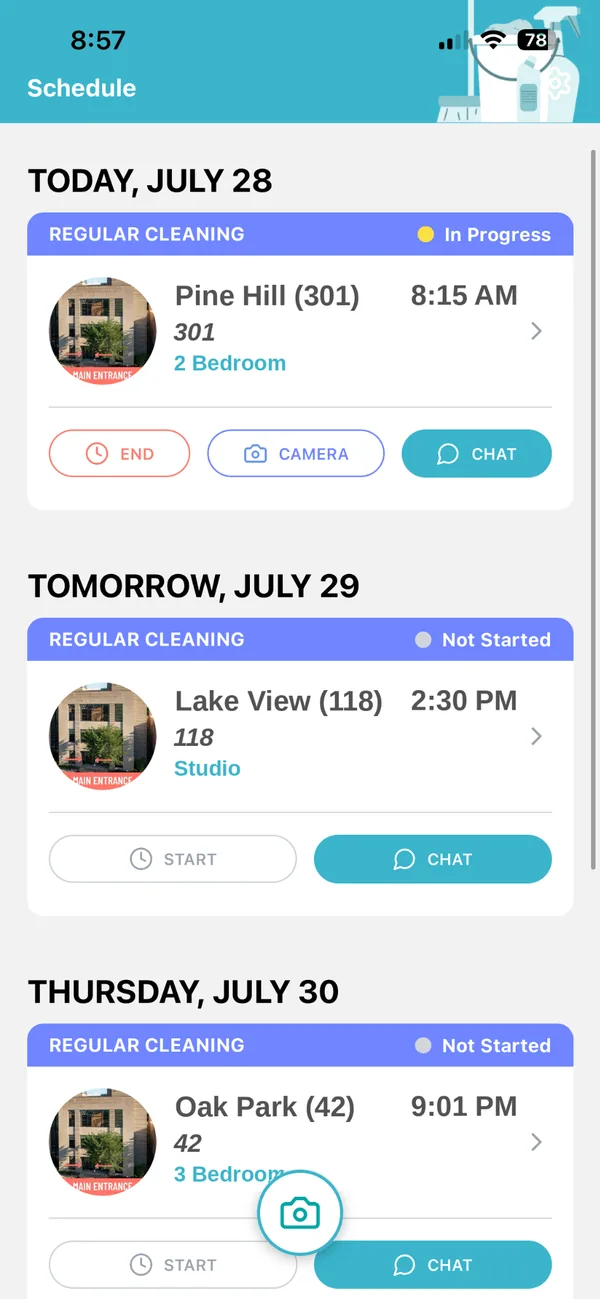
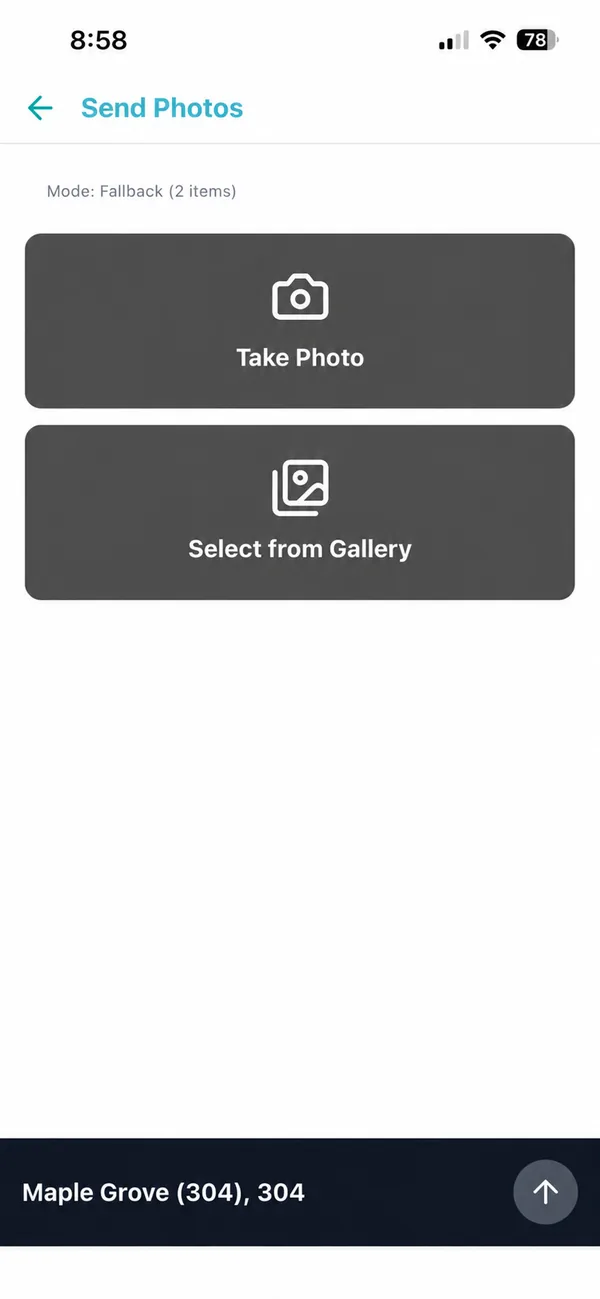
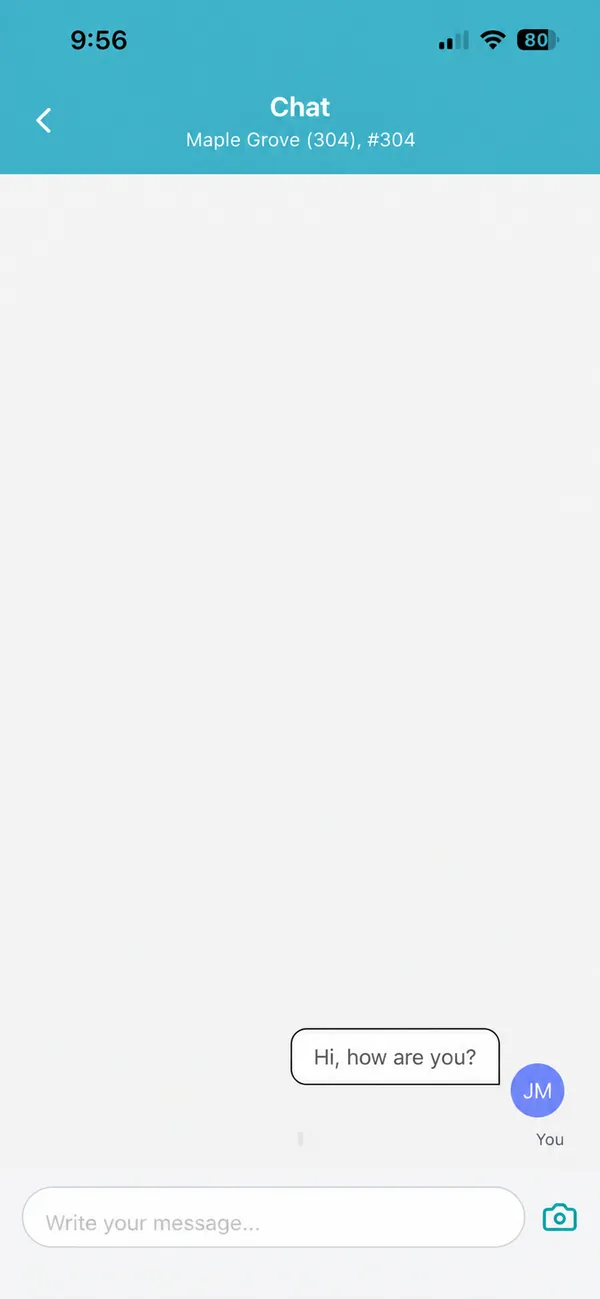
Cleancio runs hotel-style cleaning for homes and short-term rentals in Chicago and Dallas. Its housekeeping app had been left half-built by another team, so housekeepers sent cleaning photos over WhatsApp and the office uploaded every one by hand.
Web Designer Factory read the existing code, kept what worked and finished the app with React Native and Expo. Housekeepers take photos even with no signal, and each one goes to our server on Supabase and Railway, then into Podio, where Cleancio already runs its schedule. Today 20 housekeepers use Cleancio HK, and the office saves 8 hours every week.
The app is live on the App Store and Google Play as an unlisted app, so only Cleancio’s team can install it.

Native vs cross-platform vs hybrid app development
Hybrid and cross-platform get mixed up a lot. A hybrid app wraps a website inside an app shell, while a cross-platform app draws real native screens from shared code.
Here’s how the three compare for a typical business app.
| Compare | Native | Hybrid | Cross-platform |
|---|---|---|---|
| Code | Swift and Kotlin, two apps | A website in an app shell | One React Native or Flutter app |
| Build cost | Highest, two builds | Lowest | Lower, one build |
| Speed and feel | Fastest | Slower, like a website | Close to native |
| Phone features | Full access | Limited | Full access |
| Updates | Two releases each time | One release | One release, fixes over the air |
| Best for | Games and graphics | Simple content apps | Booking, ordering and field apps |
React Native or Flutter app development: which fits your app?
We build in both, so the choice comes down to your app, not our habits.
Native Swift and Kotlin
Two separate apps. Worth the extra cost only when the app leans on heavy graphics, Bluetooth hardware or the newest phone features from day one.
Flutter
Built on Dart, with its own drawing engine. A strong fit for apps with heavily custom designs and animations that must look the same on every phone.
React Native
Built on JavaScript and React. The best fit when you have a React or Next.js website, since the app can share code and logins with it. Cleancio HK runs on it.
Your proposal says which one we’d use and why.
How much does cross-platform app development cost?
Cross-platform apps from Web Designer Factory start at $7,900, and most cost $7,900 to $25,000. One codebase usually costs less than two native apps, because every screen is built once. Once your brief has everything we need, the fixed price follows in writing within 24 hours, and you pay in milestones as the app moves from design to launch.
No surprises. The price in your proposal is the price you pay, and you pay the final milestone only after your app is live in the stores.
Every app includes 30 days of support after launch. After that, maintenance, including updates for new iOS and Android versions, is quoted to match your app.
- Screens and features. Each screen and feature adds its own design, build and testing time.
- Offline sync. Saving work on the phone and syncing it later takes careful testing.
- Connected tools. Each system the app talks to, like Podio or HubSpot, adds its own setup.
- Admin panel. A web panel for managing users and content is scoped in when you need one.
From project brief to both app stores
You see clickable screens before any code is written, and test builds land on your own phone while we build.
Send your brief
Tell us what the app must do through the form or by email. Screenshots of apps you like help.
Get a fixed price
Once we have what we need, you get the scope, milestones and price in writing within 24 hours.
Test it on your phone
Approve clickable Figma screens, then install test builds on your own phone as features land.
Go live
We publish to the App Store and Google Play, public or unlisted, and support you for 30 days.
The tools behind every cross-platform app we ship
Our developers plan the app, design its structure and check every line of code. AI coding tools such as Claude Code and OpenAI Codex help them build faster, and every feature is tested before release.
Cleaning photos a month flow from Cleancio HK into Podio, with nobody uploading them by hand.
App frameworks
React Native with Expo, or Flutter, written in TypeScript or Dart.
Backend and data
Supabase and Railway servers, or the backend you already use.
Connected tools
Podio, HubSpot, Stripe and any other system that offers an API.
Releases
Signed builds for both stores, every change tracked in GitHub.
Every build goes to test devices first, so nothing reaches your users untested.
Why choose Web Designer Factory as your cross-platform mobile app development company
- Apps live today. Cleancio HK runs on both app stores right now.
- No framework bias. React Native or Flutter, whichever fits your app.
- Fixed price. The full cost is in writing before we build anything.
- You own it all. Code, data and store accounts stay in your name.
- One team. Your app, portal and website come from one place.
- We finish stalled apps. We picked up Cleancio HK and shipped it.
Related services
Apps rarely stand alone. These are the services that usually come with one.
Native, cross-platform or mobile web, compared side by side.
Custom web apps your mobile app can share data with.
Customer and member logins that work on any screen.
Subscription products with billing, accounts and an app.
Cross-platform app development FAQs
Not sure which framework fits, or whether your idea needs an app at all? Ask through the form below or at support@webdesignerfactory.com, and we’ll answer within 1 business day.
What is cross-platform app development?
Cross-platform app development is building one app that runs on both iPhone and Android from a single codebase, usually in React Native or Flutter. Instead of paying for two separate apps, you pay for one, and each update reaches both kinds of phone in the same release. The screens still follow each phone’s own design rules.
How much does cross-platform app development cost?
Cross-platform apps from Web Designer Factory start at $7,900, and most cost $7,900 to $25,000. The price depends on the number of screens, offline sync, the tools the app connects to and whether you need an admin panel. You get a fixed price in writing within 24 hours of sending your project details.
How long does it take to build a cross-platform app?
Most cross-platform apps take 8 to 20 weeks from an approved proposal to launch in the stores, and a focused first version sits at the shorter end. Web Designer Factory finished the Cleancio HK housekeeping app in 8 weeks after another team had left it half-built.
Is a React Native app as fast as a native app?
For most business apps, a React Native app feels as fast as a native one, because it draws real native buttons, lists and menus rather than a web page. Native code still wins for heavy graphics, games and Bluetooth hardware. When an app needs that, we write those parts natively or recommend a native build.
Should I choose React Native or Flutter?
Choose React Native when you already have a React or Next.js website or web app, since the mobile app can share code, logins and developers with it. Flutter suits apps with heavily custom designs that must look identical on every phone. Web Designer Factory builds in both, and your proposal explains which one fits your app.
Is Web Designer Factory a React Native app development company?
Yes, Web Designer Factory is a React Native app development company, and our developers build in Flutter too. Cleancio HK, the housekeeping app we finished for Cleancio, is a React Native app built with Expo that runs on iPhone and Android. We pick the framework that suits your app and explain the choice in your proposal.
What's the difference between a hybrid app and a cross-platform app?
A hybrid app is a website wrapped inside an app shell, so it often feels slower and has less access to the camera and other phone features. A cross-platform app shares its code but draws real native screens on each phone. For most business apps, cross-platform gives a better result for a similar budget.
Can a cross-platform app work offline?
Yes, a cross-platform app can work offline when offline mode is planned from the start. The app saves work on the phone and syncs it once there’s a signal again. Cleancio’s housekeepers take cleaning photos even with no signal, and Cleancio HK uploads them as soon as the phone is back online.
Can you turn my web app or portal into a mobile app?
Yes, Web Designer Factory can build a mobile app on top of your existing web app or portal. The app uses the same logins, database and admin panel, so your team manages everything in one place. If your web app was built in React or Next.js, the mobile app can share some of its code as well.
Do you publish the app on the App Store and Google Play for us?
Yes, we prepare the store listings, submit the app to the App Store and Google Play, and answer any questions from Apple’s or Google’s reviewers. Apps for your own staff can be published unlisted, so only the people you invite can install them. That’s how Cleancio HK is published for Cleancio’s team.
Can you finish an app another developer started?
Yes, as long as you can get us the source code. We read the existing code first, keep what works and fix or rebuild what doesn’t, which usually costs less than starting over. Web Designer Factory finished Cleancio HK this way in 8 weeks, after another team had left the housekeeping app half-built.
Who owns the app's code and store accounts?
You own the source code and the database once the final milestone is paid. The app is published under your own App Store and Google Play developer accounts, so the app, its listing and its reviews stay with your business, even if you change developers later.
How do updates work after launch?
On React Native apps built with Expo, small fixes and text changes reach phones over the air, without waiting for a store review. Bigger features and updates for new iOS and Android versions go through the stores as a new release. Every app includes 30 days of support, then maintenance is quoted to match your app.
Do you offer React Native development services for an app we already have?
Yes, Web Designer Factory takes on existing React Native and Flutter apps: new features, fixes, store updates and connections to tools such as Podio, HubSpot and Stripe. We start by reading the code and checking that it builds, then quote the work at a fixed price. Cleancio HK began that way, as an app another team had left half-built.
Do you also build native iOS and Android apps?
Yes, we build native apps in Swift for iPhone and Kotlin for Android when an app truly needs them, for example for heavy graphics or Bluetooth hardware. Most business apps don’t, so we usually recommend one cross-platform app. Our mobile app development page compares all three options.
Get a fixed price for your iPhone and Android app
Send us what the app should do, who will use it and a few apps you like. We’ll reply within 1 business day, and once we have what we need, you’ll get a fixed price in writing within 24 hours.
- One app for iPhone and Android
- Fixed price in writing in 24 hours
- Price locked once you approve
- Final payment after launch
Prefer email? Write to support@webdesignerfactory.com with what your app should do.
★★★★★ 5.0 on Google and Clutch · Reply within 1 business day