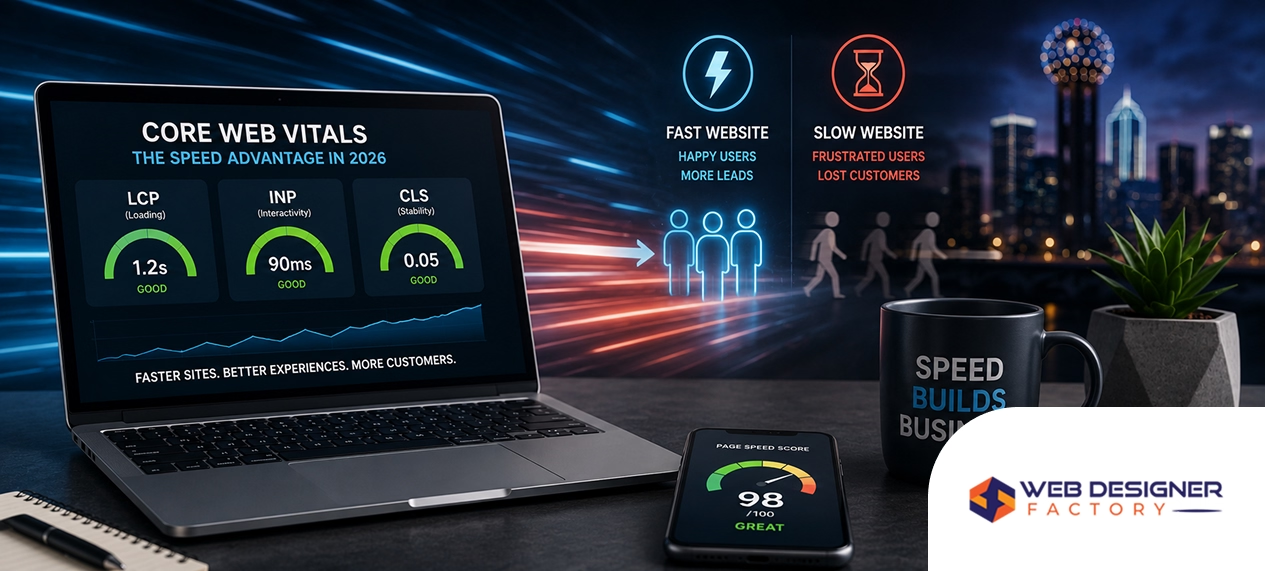


Growing a small business online has never offered more opportunity or required more strategic focus. The digital landscape in 2026 presents small business owners with powerful tools for reaching their target audience, but success requires understanding which digital marketing strategies actually drive business growth versus which consume resources without producing results.
The path to grow a small business online 2026 looks different than even a few years ago. AI has transformed how potential customers discover businesses through search engines and social media platforms. Customer behavior continues shifting toward digital channels for research and purchasing. The businesses thriving in this environment have adapted their digital marketing efforts to meet customers where they now spend attention.
This guide provides a roadmap for small business digital growth in 2026. You will learn what growth looks like in today’s AI-driven environment, why your business website remains your most valuable asset, how to build organic visibility through SEO and AI search, which digital marketing strategies produce measurable results, and what automation tools and systems can multiply your efforts. Whether you are just establishing your online presence or optimizing existing digital channels, these strategies help you drive traffic, attract customers, and achieve sustainable business growth online.
What Small Business Growth Looks Like in the AI-Driven 2026 Landscape
Understanding the current digital landscape helps you focus digital marketing efforts on strategies that actually work. The 2026 environment offers unprecedented opportunities for small businesses willing to adapt.
The Shift to Digital-First Customer Journeys
Customer behavior has fundamentally changed. The majority of purchasing decisions now begin with online research through search engines, social media channels, and AI assistants. Potential customers evaluate businesses digitally before ever making contact. This digital-first reality means your online presence directly determines how many opportunities reach you.
Even traditionally offline businesses depend on digital visibility. Someone needing a plumber searches online rather than reaching for a phone book. Someone choosing a restaurant checks reviews and menus on their phone. Someone considering a professional service provider researches options extensively before reaching out. Meeting customers in these digital moments determines whether they find you or competitors.
This shift is not just a buzzword or temporary trend. It represents permanent change in how people make decisions. Small businesses that treat digital presence as optional increasingly find themselves invisible to their target audience while competitors capture market share through stronger online presence.
AI Integration Into Discovery
AI has moved from novelty to essential infrastructure in how people discover businesses. Search engines integrate AI-generated summaries that answer queries directly. AI assistants recommend businesses based on reputation and relevance. Social media platforms use AI to determine which content reaches which audiences.
For small businesses, this AI integration means optimization requirements have expanded. Beyond traditional search engine optimization, businesses must consider how AI systems interpret and present their information. Content must be structured for AI understanding. Reputation signals must be strong enough to earn AI recommendations.
The businesses winning in this environment treat AI not as threat but as opportunity. AI tools can enhance customer engagement, automate routine tasks, and provide valuable insights previously available only to enterprises with data science teams. Integrating digital growth strategies with AI capabilities creates competitive advantages regardless of business size.
Competition and Opportunity
Digital channels have lowered barriers to reaching broader audience, but they have also intensified competition. Your potential customers can easily discover and evaluate alternatives. Standing out requires genuine differentiation and consistent visibility across the digital channels where your audience spends time.
However, many small businesses still underinvest in digital presence, creating opportunity for those who commit to digital growth. A strong online presence in a local market can capture significant share from competitors with weak or outdated digital marketing strategies. The gap between digitally sophisticated small businesses and laggards continues widening.
The opportunity extends beyond competing with similar businesses. Digital channels let small businesses reach customers who would never have discovered them through traditional marketing. Geographic limitations matter less when you can serve customers remotely or attract them from broader areas through compelling digital presence.
Why Your Website Is Still the Most Important Growth Asset
Despite proliferation of digital platforms, your business website remains the foundation of successful digital growth strategy. Understanding why helps you prioritize investment appropriately.
Ownership and Control
Your website is the only digital asset you fully own and control. Social media platforms can change algorithms, remove features, or decline in popularity. Marketplace listings operate under platform rules that can change without notice. Only your website provides complete control over presentation, messaging, and customer experience.
This ownership matters increasingly as digital platforms become more restrictive and unpredictable. Businesses that built audiences entirely on social media have seen visibility collapse when algorithms changed. Businesses dependent on single marketplaces face vulnerability to policy changes or competition from the platform itself.
Your website serves as the hub connecting all other digital channels. Social media drives traffic to your website. Advertising campaigns send prospects to landing pages on your website. Search visibility brings visitors to your website. Email marketing nurtures relationships that convert on your website. Every effective digital marketing strategy ultimately connects back to your owned web presence.
Credibility and Trust
A professional business website establishes credibility that other digital channels cannot match. Potential customers expect legitimate businesses to have functional, professional websites. Absence of a quality website raises questions about whether a business is established, capable, and trustworthy.
Your website provides space to demonstrate expertise, showcase work, present testimonials, and explain what makes your business valuable. Social media profiles offer limited space for this positioning. Your website allows comprehensive presentation that builds confidence with prospective customers evaluating options.
The design and functionality of your website influence how visitors perceive your business. Outdated, slow, or poorly designed websites create negative impressions that undermine other marketing efforts. Professional websites signal businesses that invest in quality and pay attention to customer experience.
Conversion Infrastructure
Effective conversion happens on your website where you control the entire experience. Landing pages optimized for specific campaigns convert visitors into leads. Service pages explain offerings in detail that drives decisions. Contact forms and booking systems capture interested prospects.
Trying to convert customers entirely within social media platforms or other channels limits your options. You cannot customize the experience, track behavior in detail, or optimize systematically. Your website provides the infrastructure for sophisticated conversion optimization that improves results over time.
Web design services should prioritize conversion optimization alongside aesthetics. Beautiful websites that fail to convert visitors waste the traffic your digital marketing efforts generate. Effective business websites balance visual appeal with conversion-focused design.
Foundation for All Digital Marketing
Every digital marketing strategy performs better when supported by a strong website. SEO builds organic visibility that drives website traffic. Paid advertising sends prospects to website landing pages. Content marketing attracts audiences who then explore your website. Email marketing nurtures relationships that convert through website interactions.
Without a solid website foundation, digital marketing efforts underperform. Advertising that sends traffic to poor landing pages wastes budget. SEO that ranks pages providing bad experiences fails to convert visibility into business. Social media that drives clicks to confusing websites loses interested prospects.
Investing in your website before scaling other digital marketing channels ensures those investments produce returns. A strong website multiplies effectiveness of all other digital marketing efforts while a weak website undermines everything built upon it.
Organic Growth Through SEO, AI Search & Local Visibility
Organic digital channels provide sustainable growth without ongoing advertising costs. Building visibility through search engines and AI platforms creates compounding returns on initial investment.
SEO as Growth Foundation
Search engine optimization remains one of the most effective digital growth strategies because it connects you with potential customers actively seeking solutions. People searching for what you offer have already identified need and taken action to find providers. This intent makes SEO traffic particularly valuable.
Effective SEO requires understanding what your target audience searches for and creating content that serves those needs. Keyword research reveals the terms potential customers use when seeking businesses like yours. Content addressing these searches with helpful, comprehensive information earns visibility that drives website traffic.
Technical SEO ensures search engines can properly crawl, index, and evaluate your website. Page speed, mobile functionality, site structure, and other technical factors influence rankings alongside content quality. Neglecting technical foundations limits what even excellent content can achieve.
The compounding nature of SEO makes it increasingly valuable over time. Early investments in content and optimization continue generating traffic long after initial effort. As authority builds, ranking for additional terms becomes easier. This compounding growth contrasts with advertising where leads stop when spending stops.
AI Search Optimization
AI search has become a significant discovery channel that requires specific optimization approaches. Google’s AI Overviews, ChatGPT, Perplexity, and other AI systems influence how potential customers find and evaluate businesses. Visibility in these AI-powered results requires attention beyond traditional SEO.
AI systems favor content structured for easy extraction and citation. Clear answers to common questions, well-organized information with logical headings, and comprehensive coverage of topics earn AI visibility. Content written conversationally in natural language performs better than keyword-stuffed text optimized for older algorithms.
Reputation signals influence AI recommendations significantly. Businesses with strong reviews, authoritative backlinks, and consistent positive mentions across the web earn more favorable AI treatment. Building digital reputation supports AI visibility alongside traditional search rankings.
SEO services should now include AI search optimization as standard practice. Traditional SEO and AI optimization overlap significantly but require some distinct considerations that affect how content gets created and structured.
Local SEO for Service Businesses
Local visibility matters critically for businesses serving geographic areas. When potential customers search for services near them, local SEO determines whether they find you or competitors. This visibility directly impacts lead generation for location-dependent businesses.
Google Business Profile optimization forms the foundation of local SEO success. Complete, accurate profiles with regular updates signal legitimacy to Google’s local ranking algorithms. Reviews, photos, posts, and engagement all contribute to profile strength that influences local visibility.
Local content demonstrates relevance to your service area. Pages addressing location-specific topics, local case studies, and community involvement content build local authority. This localized content helps search engines understand your geographic relevance and match you with nearby searchers.
Citations across online communities and directories reinforce local presence. Consistent business information across reputable websites builds the local signals that influence rankings. Local SEO services combine these elements into comprehensive strategies driving local visibility.
Content Marketing for Organic Growth
Content marketing attracts potential customers by providing valuable content that addresses their questions and concerns. Rather than interrupting audiences with promotional messages, content marketing earns attention by being genuinely helpful. This approach builds trust while driving organic visibility.
Effective content marketing requires understanding your target audience deeply. What questions do they ask? What problems do they face? What information helps them make decisions? Content addressing these needs attracts the right visitors and positions your business as helpful authority.
Consistency matters for content marketing success. Regular publication builds audience expectations and search engine recognition. Sporadic content creation fails to develop momentum. Establish sustainable publishing cadence that you can maintain long-term rather than starting aggressively and burning out.
Content formats should match audience preferences and topic requirements. Blog posts work for many educational topics. Video content suits demonstrations and personal connection. Guides and resources work for comprehensive reference material. Choose formats that serve both content needs and audience consumption habits.
Digital Marketing Strategies That Drive Measurable Results
Beyond organic channels, various digital marketing strategies can accelerate growth when implemented effectively. Understanding which strategies suit your business and how to execute them successfully guides resource allocation.
Paid Advertising Fundamentals
Paid advertising through Google Ads, social media ads, and Google Display Network provides immediate visibility and control over reach. Unlike organic strategies that build over time, advertising produces results as soon as campaigns launch. This immediacy makes advertising valuable for generating quick traction.
Effective paid advertising requires understanding your target audience and where they spend attention. Google Ads captures high intent prospects actively searching. Social media advertising reaches audiences based on demographics, interests, and behaviors. Display advertising builds awareness across the web. Different platforms serve different purposes in your growth strategy.
Return on advertising investment depends heavily on execution quality. Poorly targeted campaigns waste budget on irrelevant audiences. Weak creative fails to capture attention. Landing pages that do not convert squander click costs. Successful advertising requires ongoing optimization based on data driven insights about what works.
Budget allocation should match business goals and sales cycle. Businesses with high customer lifetime value can afford higher acquisition costs. Short sales cycles allow rapid testing and optimization. Longer cycles require patience and attribution modeling to understand true advertising impact.
Email Marketing for Nurturing and Retention
Email marketing remains one of the most effective digital marketing channels for both nurturing prospects and retaining existing customers. Direct access to subscriber inboxes provides reliable communication channel unaffected by algorithm changes affecting other digital platforms.
Building email lists requires compelling reasons for people to subscribe. Lead magnets offering valuable content in exchange for contact information attract prospects. Newsletter subscriptions work when you consistently deliver helpful content. Exclusive offers motivate customers to join lists.
Email marketing success depends on providing genuine value rather than constant promotion. Educational content, helpful tips, and exclusive insights keep subscribers engaged. Promotional content mixed appropriately with value maintains relationships without burning out your list.
Segmentation improves email effectiveness by delivering relevant content to different audience groups. New subscribers need different nurturing than long-term customers. Prospects interested in different services should receive tailored content. Segmented campaigns consistently outperform generic broadcasts.
Social Media Marketing Strategy
Social media marketing helps build awareness, engage audiences, and drive traffic to your website. While organic social reach has declined, strategic social media presence supports overall digital marketing efforts and brand building.
Platform selection should match where your target audience actually spends time. B2B businesses often find LinkedIn most valuable. Visual businesses may thrive on Instagram. Local service businesses may focus on Facebook community groups. Trying to maintain presence everywhere dilutes effort and produces mediocre results.
Social media engagement matters more than follower counts. Meaningful interactions with potential customers and industry participants build relationships and visibility. Vanity metrics like follower numbers mean little if audiences do not engage or convert.
Social media presence supports other digital channels by providing content distribution, social proof, and brand visibility. Even if social media does not directly generate significant leads, it contributes to overall digital presence that influences customer behavior across channels.
Conduct Market Research Continuously
Successful digital marketing strategies evolve based on ongoing market research and customer feedback. Understanding changing customer behavior, competitive landscape, and market opportunities guides strategy refinement over time.
Analytics provide valuable insights into what works in your digital marketing efforts. Google Analytics reveals which channels drive traffic and conversions. Platform-specific analytics show content performance. Tracking key metrics systematically enables data driven optimization.
Customer feedback offers qualitative insights that analytics cannot provide. Why do customers choose you? What concerns almost stopped them? What would make them more likely to recommend you? These insights shape messaging and positioning across digital channels.
Competitive analysis reveals opportunities and threats in your market. What digital strategies do successful competitors employ? Where are competitors weak? How can you differentiate? Regular competitive review keeps your growth strategy responsive to market dynamics.
Automations, Tools & Systems Every Small Business Should Use
Automation and systems multiply small team effectiveness, enabling small businesses to execute digital marketing strategies at scale without proportional resource increases. The right tools and processes dramatically improve efficiency and results.
Marketing Automation Essentials
Marketing automation handles repetitive tasks while maintaining personalized customer interactions. Email sequences, lead nurturing, follow-up reminders, and campaign execution can run automatically while you focus on high-value activities requiring human attention.
Email automation triggers relevant communications based on subscriber behavior and characteristics. Welcome sequences introduce new subscribers to your business. Nurture sequences move prospects through buying journeys. Re-engagement campaigns win back inactive contacts. These automated workflows work continuously without manual effort.
Lead scoring automation identifies which prospects deserve immediate attention versus continued nurturing. Scoring based on engagement, demographics, and behavior helps prioritize sales efforts. Your team focuses on ready buyers while automation nurtures earlier-stage prospects.
CRM integration connects marketing automation with sales processes for seamless handoffs. When leads reach qualification thresholds, they automatically route to appropriate team members with full context. This integration improves both marketing effectiveness and sales efficiency.
Analytics and Tracking Systems
Effective digital growth requires systematic tracking and analysis. Without measurement, you cannot know what works, optimize performance, or demonstrate ROI. Implementing proper analytics provides the visibility needed for informed decisions.
Google Analytics tracks website traffic, user behavior, and conversion events. Understanding where visitors come from, what they do on your site, and whether they convert enables optimization across your digital presence. Every small business should have properly configured analytics tracking.
Conversion tracking connects marketing activities to business outcomes. Tracking which campaigns, keywords, and content generate leads and sales reveals true performance beyond surface metrics. This tracking guides budget allocation and strategy refinement based on actual results.
Dashboard systems consolidate key metrics from various digital channels into unified views. Rather than checking multiple platforms separately, dashboards provide at-a-glance understanding of digital marketing performance. Regular dashboard review keeps performance on track.
Customer Engagement Tools
Tools that enhance customer engagement improve relationships and conversion rates throughout customer journeys. From initial contact through ongoing retention, engagement tools create better experiences that drive business growth.
Live chat and chatbot systems enable immediate response to website visitors with questions. Prompt engagement captures interested prospects who might otherwise leave without converting. AI-powered chatbots handle common inquiries around the clock while routing complex questions to human team members.
Review management tools help you collect, monitor, and respond to customer feedback across platforms. Encouraging satisfied customers to leave reviews builds social proof. Responding to all reviews demonstrates customer focus. Managing reputation across review sites supports both conversion and search visibility.
Social listening tools monitor mentions of your business and relevant topics across online communities and social media platforms. Understanding what people say about your business and industry provides valuable insights for improving business processes and marketing messaging.
Process Documentation and Systems
Sustainable digital growth requires documented processes and systems rather than ad-hoc execution. Systems ensure consistency, enable delegation, and support improvement over time. Small business owners should develop documented processes for key digital activities.
Content creation systems define topics, formats, schedules, and quality standards. With documented process, content production maintains consistency even when different team members execute. Templates, checklists, and guidelines support quality at scale.
Campaign execution systems ensure marketing campaigns follow proven frameworks. Launch checklists prevent missed steps. Review processes catch errors before publication. Post-campaign analysis guides improvements for future campaigns.
Reporting systems establish regular cadence for performance review. Weekly, monthly, and quarterly reviews at appropriate depths keep digital marketing efforts on track. Documented reporting processes ensure consistent analysis and informed decision-making.
Digital marketing services should help you establish systems that continue working after initial setup. Agencies that create dependency rather than building client capability provide less long-term value than those focused on sustainable success.
Your Next Steps
Implementing a successful digital growth strategy requires systematic action across multiple channels. These steps help you begin growing your small business online with strategies that produce measurable results.
- Audit your current online presence including website, search visibility, and social profiles
- Ensure your website provides professional experience with clear conversion paths
- Claim and optimize your Google Business Profile for local visibility
- Implement basic analytics tracking to measure traffic and conversions
- Identify target keywords and begin creating content addressing customer questions
- Choose one or two social media channels matching your audience and establish consistent presence
- Set up email marketing with initial lead magnet and welcome sequence
- Consider paid advertising to generate immediate leads while organic strategies build
- Implement automation for routine marketing tasks to improve efficiency
- Establish regular review cadence to optimize strategies based on performance data
Ready to accelerate your small business growth online? Get your free proposal and discover how integrated digital marketing strategies can drive measurable results for your business. View our portfolio to see growth results we have achieved for small businesses like yours.
Frequently Asked Questions
What is the most effective way to grow a small business online in 2026?
The most effective approach combines a fast, AI-optimized business website with SEO, local visibility, and automation working together. Your website serves as the foundation where all digital marketing efforts converge and conversions happen. Search engine optimization builds organic visibility that attracts potential customers actively searching for solutions you provide. Local SEO and Google Business Profile optimization capture nearby prospects ready to buy. Marketing automation handles routine tasks efficiently while maintaining personalized customer interactions. These elements reinforce each other, creating compounding growth that accelerates over time. Small businesses seeing fastest growth typically invest in all these areas rather than relying on single channels.
Is social media required for business growth?
Social media helps build awareness and engagement, but your website and search presence remain the most important digital assets for business growth. Many successful small businesses maintain minimal social media presence while thriving through strong websites, SEO, and other digital marketing channels. Social media can amplify other efforts and build brand visibility, but it should not come at the expense of foundational investments in your website and search visibility. If resources are limited, prioritize your business website, Google Business Profile, and basic SEO before extensive social media marketing. Once foundations are solid, social media presence can enhance overall digital marketing efforts.
How important is AI search for business growth?
AI search is very important and growing more significant every month. AI systems now influence how potential customers discover and trust businesses through Google’s AI Overviews, ChatGPT, Perplexity, and other platforms. Visibility in AI search results requires specific optimization approaches including clear content structure, comprehensive topical coverage, and strong reputation signals. Businesses appearing in AI-generated answers and recommendations gain significant visibility advantages over competitors invisible to these systems. As AI integration into search continues expanding, optimization for AI discovery becomes increasingly essential for maintaining and growing digital visibility.
How much should small businesses invest in digital marketing?
Most successful small businesses invest 5 to 10 percent of revenue into digital marketing efforts and digital growth strategies. Newer businesses or those in competitive markets may need to invest toward the higher end to establish presence. Established businesses with strong organic visibility may maintain growth with lower percentages. Investment should match growth goals, competitive intensity, and current digital maturity. Businesses starting from zero online presence need more upfront investment to build foundations. Those with established presence may focus more on optimization and expansion. Track return on digital marketing investment to guide budget decisions based on actual business results rather than arbitrary percentages.
How long does online growth take to show results?
Timeline varies by strategy and starting point. Paid advertising can generate leads immediately upon launch, with optimization improving results over subsequent weeks. Local visibility improvements through Google Business Profile optimization often show impact within 30 to 60 days. SEO and content marketing typically require 60 to 120 days to produce significant organic traffic, though results compound over time. Initial traction from digital marketing efforts often appears within the first few months, with compounding growth developing over six to twelve months of consistent effort. Small businesses should plan for both quick wins through paid channels and patient building of organic visibility that provides sustainable long-term growth.