

Introduction
A landscaping company in McKinney called us last spring with a familiar problem. Their website looked fine, their SEO was technically sound, and their Google Search Console impressions were climbing, but almost nothing was converting. When we dug into the analytics, the issue wasn’t design or rankings. It was the content itself: thin service pages, no blog, and nothing on the site that actually answered the questions their customers were typing into Google before they picked up the phone.
That’s the gap a content creation agency exists to close. It’s a different job than web design and a different job than technical SEO, even though all three work together. If you’ve been Googling “content creation agency,” comparing content creation services, or trying to figure out whether you need one, what they actually deliver, or how it’s different from hiring a freelance writer, this article walks through all of it, including what we look for before taking on a new content client.
Key Takeaways
- A content creation agency plans, writes, designs, and optimizes the words, images, and video that live on your website and social channels, distinct from web design (how it looks) and SEO (how it ranks).
- Small businesses are 23% more likely than average to see measurable ROI from blog content, according to HubSpot’s 2026 Marketing Statistics report.
- Good content agencies work from real keyword and search intent data, not guesswork, and they write for both Google and AI answer engines like ChatGPT and Perplexity.
- “Content creation near me” searches usually turn up freelancers and generalist agencies. Look for one with a documented process, not just a portfolio.
- The most common mistake businesses make is hiring for volume (a set number of posts per month) instead of hiring for a strategy tied to actual business goals.
What a Content Creation Agency Actually Does
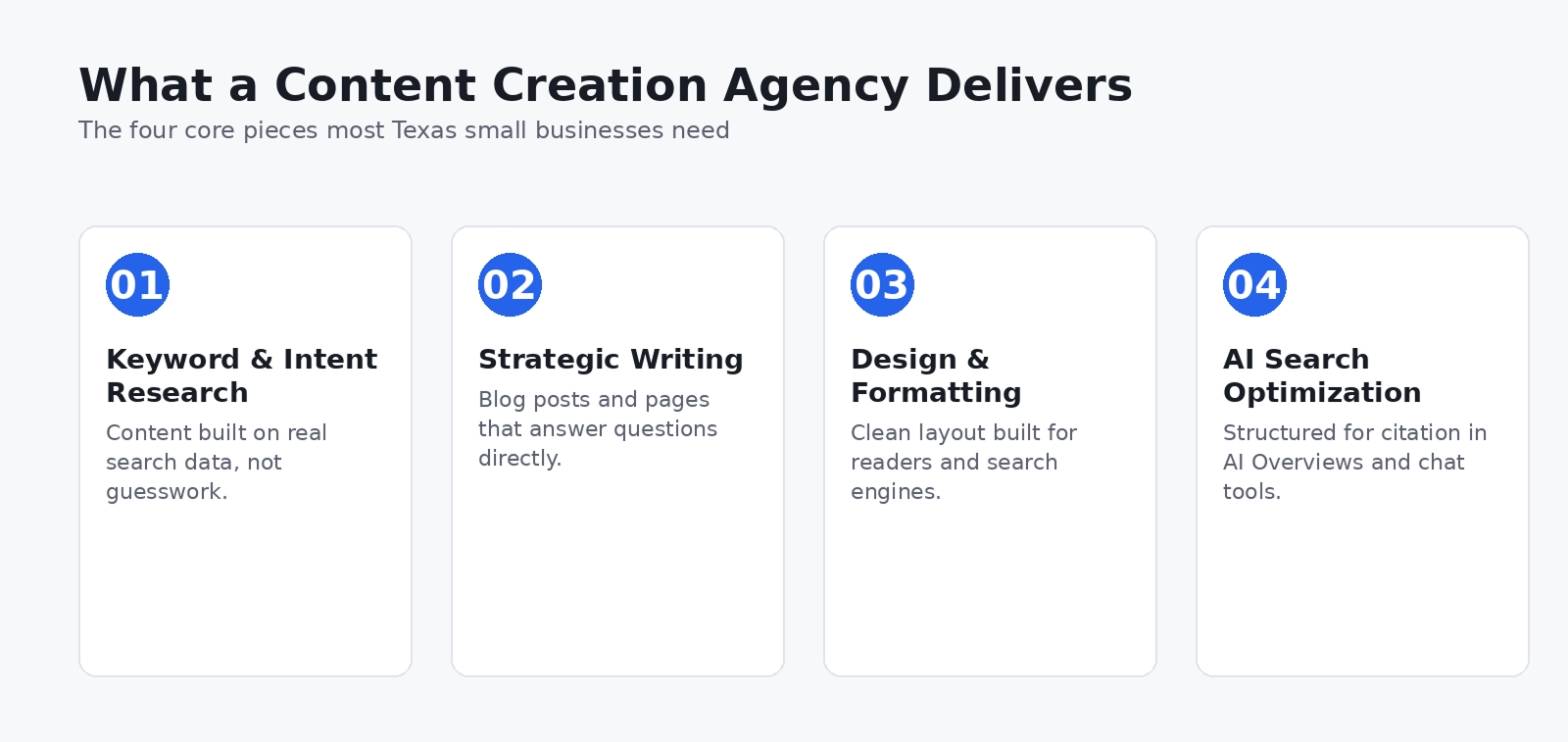
A content creation agency is responsible for the material that fills your website, blog, and social profiles: the writing, the images, the video scripts, and increasingly, the structured data that helps AI tools understand and cite that content. Its content creation services typically cover blog posts, service page copy, case studies, email newsletters, social captions, and video or infographic concepts, depending on the scope you agree to.
It’s worth being precise about where this overlaps with other services, because the terms get used loosely.
Content Creation vs. Content Marketing vs. SEO Writing
Content creation is the production work: writing the piece, designing the graphic, filming the clip. Content marketing is the strategy layer above it, deciding what to create, for whom, and how it maps to a funnel. SEO writing is content creation with keyword research and on-page optimization built in from the start, so the piece is written to rank, not written first and optimized later.
In practice, most businesses need all three working together. A content agency that only produces without a strategy behind it tends to generate a lot of blog posts that never move the needle. One with strategy but weak execution produces smart briefs that read like they were written by a committee. You want both in the same team, and both should be built around Google’s own people-first content guidelines, which reward experience, expertise, authoritativeness, and trust over content written primarily to game rankings.
The Content Creation Process We Use
Every project starts with data, not opinion. We pull keyword and search volume data, review the client’s Google Search Console history to see what’s already driving impressions, and check Google Analytics to understand which existing pages hold attention and which ones bounce visitors immediately.
From there, the process looks like this:
- Keyword and intent mapping. We group keywords by what the searcher actually wants: informational, comparison, or ready-to-buy. A content creation agency in Frisco needs different content for someone typing “content creation near me” (ready to hire) versus “what does a content creation agency do” (still researching).
- Outline and brief. Every piece gets a brief with the target keyword, the direct-answer requirement for the first 100 words, the internal links it needs to include, and any schema markup it should carry (Article, FAQPage, or LocalBusiness, depending on the page).
- Drafting. Written for the reader first. If it doesn’t answer a real question a real business owner has, it doesn’t ship.
- Design and formatting. Headers, bullet structure, and any supporting graphics get built in Figma or directly in WordPress and Webflow, whichever platform the client runs on.
- QA and publishing. A second editor checks the piece against the brief, checks every external link actually resolves, and confirms the on-page schema validates before it goes live.
A Real Client Example
A HVAC company in Plano came to us with a site that got decent local traffic but almost no organic blog traffic outside their branded search terms. About 70% of their site visits were direct or referral, meaning Google barely knew they existed for anything beyond their own name. We built a 12-week content calendar targeting service-and-location combinations they weren’t competing for yet (“furnace repair Plano,” “AC maintenance checklist,” and similar terms), paired with FAQ schema on each page. Within the first quarter, organic sessions from non-branded search terms grew, and the blog itself became the second-highest source of contact form submissions on the site, right behind the homepage.
That’s the pattern we see most often. The win isn’t usually a single viral post. It’s a steady library of pages that each answer one specific question well enough to rank and convert on their own.
How to Find a Content Creation Agency Near You
If you’re searching “content creation near me,” you’ll mostly find two types of results: solo freelancers and full-service agencies. Neither is automatically the right answer. A freelancer can be a great fit if you need a steady stream of blog posts and already have a content strategy in place. An agency makes more sense if you need the strategy built from scratch, or if you want writing, design, SEO, and web development coordinated by the same team instead of managed separately across three different vendors.
Whichever route you choose, ask to see a documented process (not just a portfolio), ask how they measure success beyond “we published X posts,” and ask whether they write with AI search visibility in mind, since a growing share of buyers now start their research in ChatGPT, Gemini, or an AI Overview rather than a traditional Google search.
Common Mistakes Businesses Make When Hiring a Content Agency
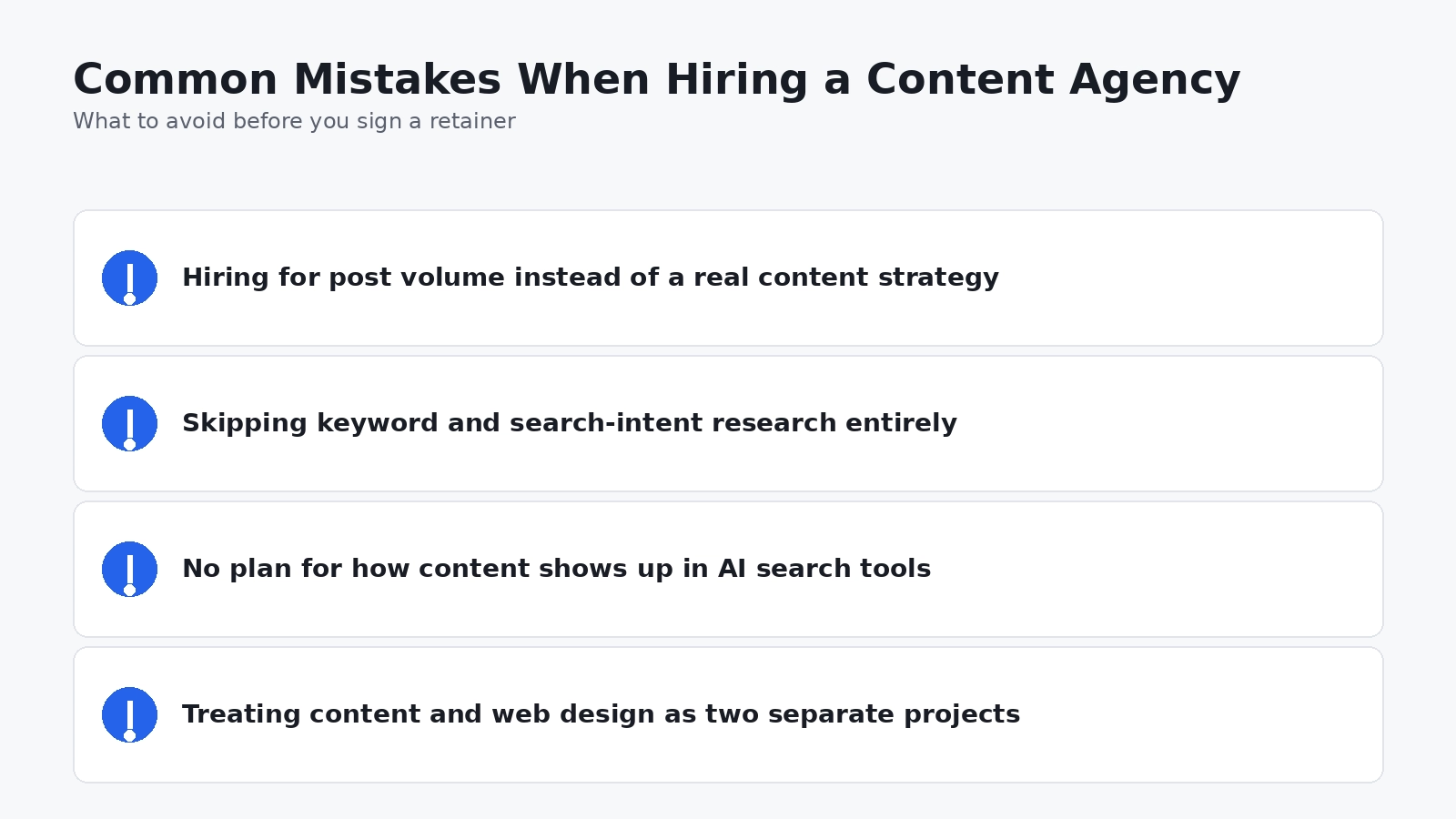
- Hiring for volume instead of strategy. Four generic posts a month beats zero, but four posts built around real search intent and internal linking will outperform forty that aren’t. Content Marketing Institute’s 2026 B2B research found that among marketers who rated their programs effective, content relevance and quality was the single biggest factor they credited, ahead of team skills, sales alignment, and technology.
- Skipping the keyword research step. Content written without search data behind it is a guess, even when it’s well written.
- No plan for AI search. Content built only for traditional Google rankings misses a growing slice of traffic. Structuring answers clearly, with direct responses up front and clean formatting, helps that same content get pulled into AI Overviews and cited by tools like Perplexity and Claude.
- Treating content and design as separate projects. A brilliant blog post on a slow, cluttered page still underperforms. Content and web design should be planned together, not bolted on after the site is built.
- No measurement plan. If you can’t see which posts are driving traffic and leads in Google Analytics and Search Console, you can’t tell what’s working.
What We Check Before Taking on a New Content Client
Before we start writing anything, we run through a short internal audit: current organic traffic trends in Google Analytics, top queries and click-through rates in Search Console, existing content gaps against competitors, site speed and mobile usability (since even great content underperforms on a slow site), and whether the site has any structured data in place already. That audit shapes the first 90 days of the content calendar, so the earliest work targets the gaps most likely to move the needle instead of just filling a publishing schedule.
Conclusion
A content creation agency isn’t a nice-to-have add-on to your website. It’s the part of your marketing that actually gives Google, and increasingly AI search tools, a reason to send people to you. The businesses that see the strongest results treat content, design, and SEO as one connected system rather than three separate purchases.
If you’re weighing whether to build this in-house, hire a freelancer, or bring in a team that can handle your content and your website together, take a look at our Digital Marketing services or browse a few examples in our portfolio to see how we’ve approached this for other Texas businesses. If you want a deeper look at how AI search is changing what “good content” even means right now, our guide on how to rank in ChatGPT, Gemini, and Perplexity is a good next read. We’re happy to walk through what a content plan would actually look like for your site, no pressure, just a straight answer.
FAQs
What is a content creation agency?
A content creation agency is a company that plans, produces, and publishes the written and visual content businesses use to market themselves, including blog posts, website copy, social media content, video scripts, and graphics. Most also handle the keyword research and optimization work needed to help that content actually get found.
What does a content creation agency do?
A content creation agency plans, writes, designs, and publishes the content that lives on your website and social channels, including blog posts, service page copy, video scripts, and graphics, built around keyword research and business goals rather than produced at random.
What is an AI content creation agency?
An AI content creation agency is a content agency that uses AI tools as part of its production process, typically for first drafts, research, or ideation, while still relying on human writers and editors to fact-check, localize, and shape the final piece. It’s different from a fully automated content service, which publishes AI output with little to no human review. If an agency calls itself an “AI content creation agency,” ask specifically where AI is used in their process and where a human takes over, since that answer tells you a lot about the quality you’ll actually get. For more on how this is reshaping search overall, see our breakdown of AI search optimization for Texas small businesses.
How is a content creation agency different from an SEO agency?
An SEO agency focuses on technical rankings factors like site structure, backlinks, and page speed. A content creation agency focuses on the actual written and visual material on the page. The strongest results usually come from the two working together, since well-optimized content still needs a technically sound site to rank.
How much does a content creation agency cost?
Pricing varies widely depending on scope, but most small business content retainers fall somewhere between a few blog posts a month with basic optimization and a full content calendar that includes strategy, writing, design, and reporting. Ask any agency for a breakdown of exactly what’s included before comparing quotes.